There is a moment every fall when I realize I’ve stopped hiking quite so much and started looking.
A shaft of morning light catches a yellow leaf. Red maples appear among mountainsides that were solid green only weeks earlier. Mist settles into a valley while the ridges above it catch the first sunlight of the day. A familiar stretch of trail suddenly looks completely different.
That’s when the camera comes out.
I’ve spent a lot of time hiking and photographing the Benton MacKaye Trail, but autumn always makes me see it differently. Perhaps that’s because fall doesn’t simply change the color of the landscape. It changes the light, the views, the forest floor, the streams—and even the mood of the mountains.
In September, I wrote about my grandfather’s belief that “fall starts July 5th.” He understood that autumn begins long before we see brilliant foliage. After the tremendous outward rush of spring and early summer, nature gradually begins pulling back and conserving.
October is when that quiet transition finally puts on a show.
So rather than simply telling you about fall on the BMT, this month I’d like to show you.
These are the mountains in autumn, as I’ve experienced them through my lens.
Kirkland Gap, North Carolina section (credit Dave Meeks)
There Is No Single “Peak”
Every October, one question seems to dominate conversations about the mountains:
When will the leaves peak?
It’s a reasonable question, especially if you’re traveling to hike or photograph the Southern Appalachians. But after spending years watching fall unfold, I’ve come to think we’re a little too obsessed with peak color.
Because there really isn’t one peak.
The Benton MacKaye Trail travels nearly 300 miles through Georgia, Tennessee, and North Carolina and crosses a remarkable range of elevations and landscapes. Autumn doesn’t arrive everywhere at once.
A high ridge can be ablaze with color while a creek valley below remains mostly green. A week later, the ridge may have lost many of its leaves just as the valley reaches its most brilliant color.
Even on the same mountainside, individual trees seem to follow their own calendars.
That unpredictability is part of what makes fall so interesting to photograph.
There is always something changing.
(credit Dave Meeks)
First Light
If I could choose only one time to photograph the mountains in fall, it would probably be early morning.
There is something about October light.
The sun rises lower in the sky than it did during summer, sending warm light across ridges rather than directly down upon them. Mountains that can appear flat at midday suddenly become layers of light and shadow.
And then there is the fog.
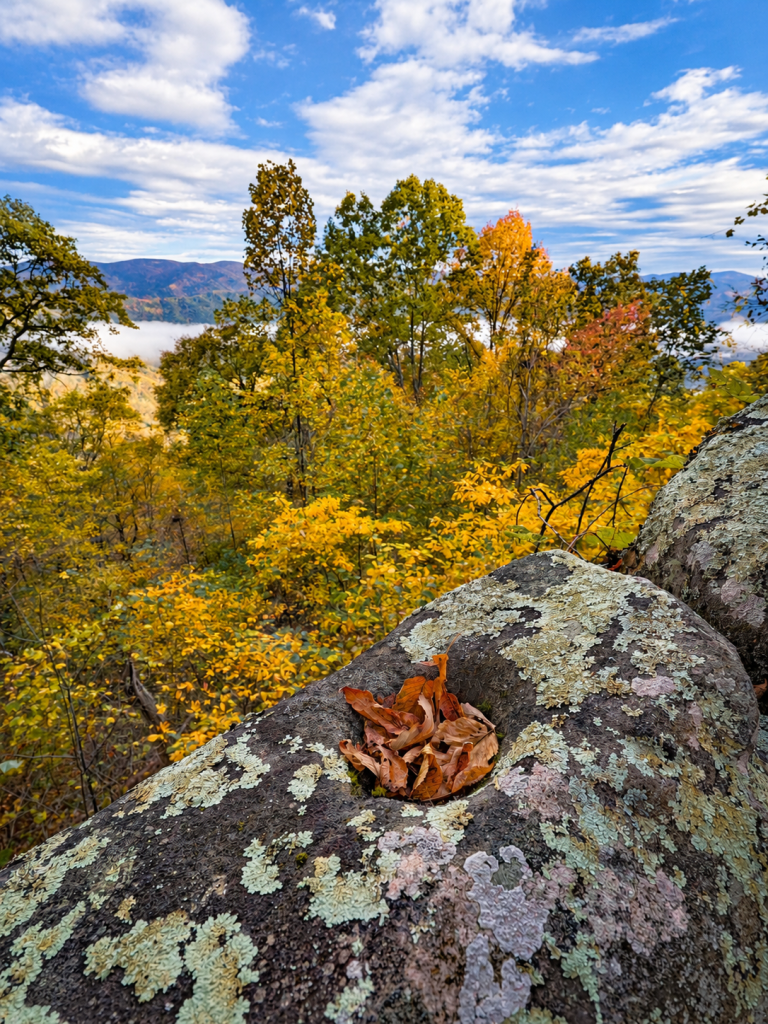
Cool autumn nights often create mist in valleys and along waterways. From a high overlook, you may find yourself standing above a sea of clouds with only distant ridgelines visible.
Minutes later, it can all disappear.
That’s one of the things photography has taught me about the mountains: sometimes the best moments don’t wait.
You can return to the same place tomorrow at exactly the same time and see an entirely different landscape.
(credit Dave Meeks)
The Trail Beneath Your Feet
It’s easy to spend autumn looking up.
The mountains are colorful. The canopy glows. Every overlook seems to demand another photograph.
But some of my favorite fall scenes are much closer.
They’re beneath my feet.
By October, the trail itself becomes part of the season.
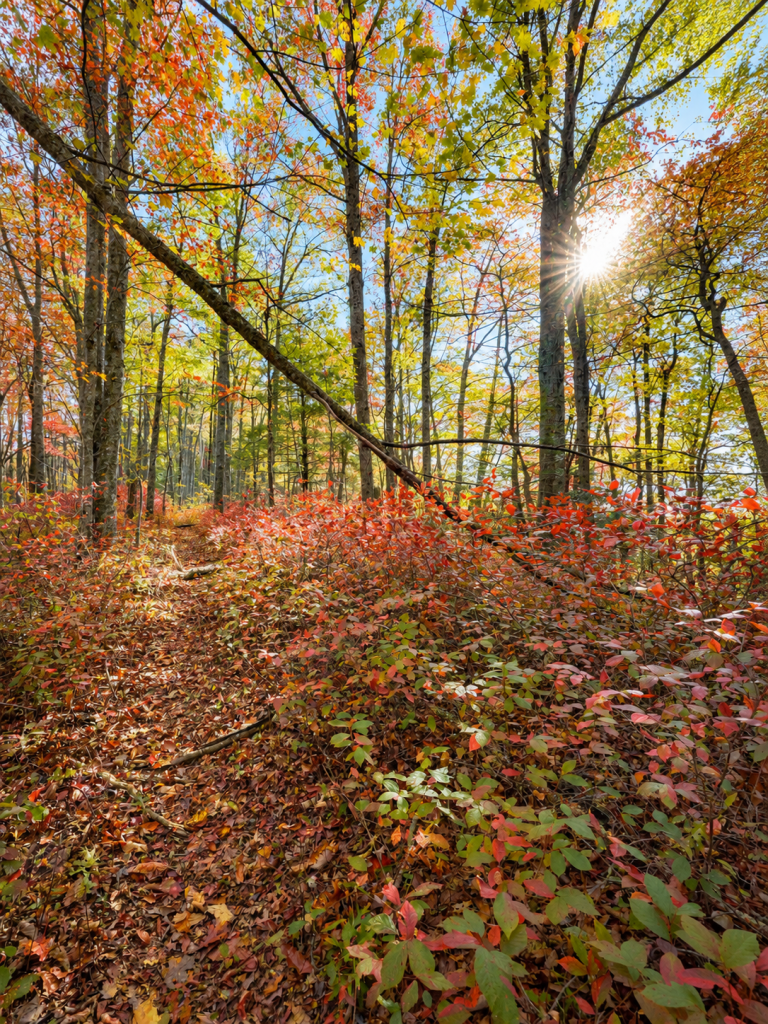
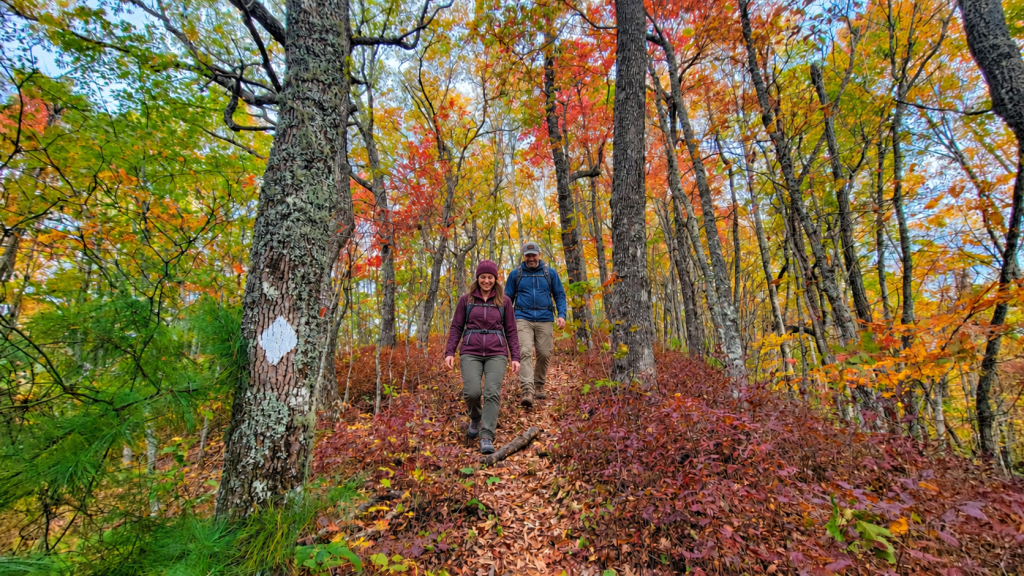
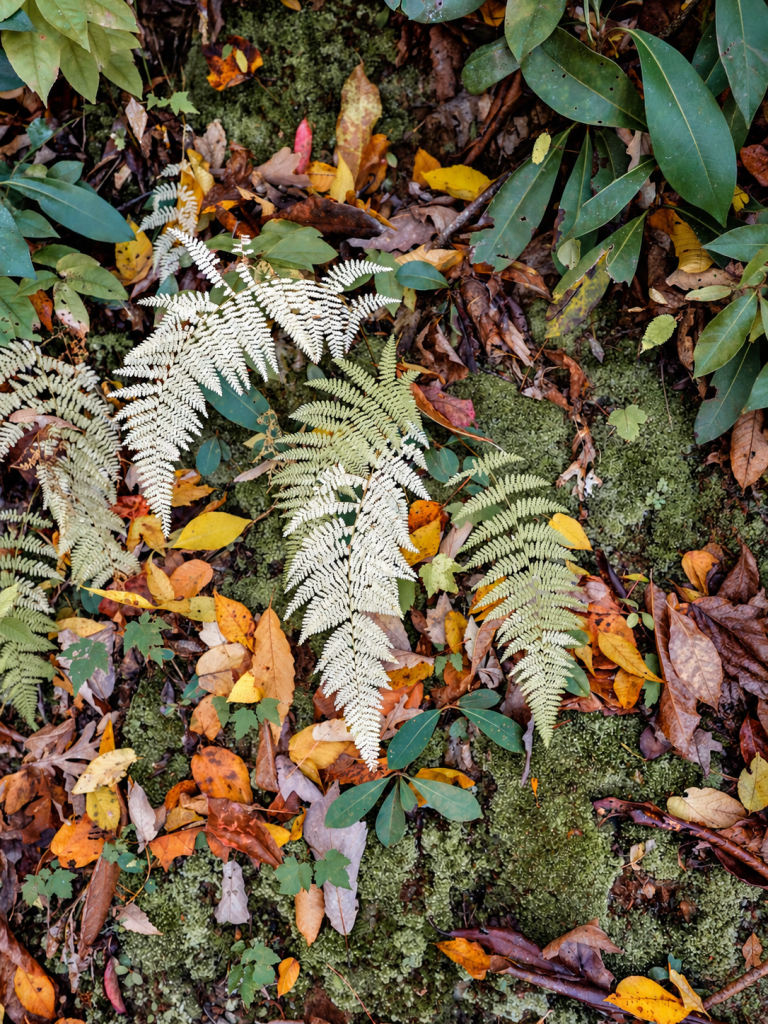
Red, orange, and yellow leaves collect along the tread. Fallen leaves gather around rocks and roots. A white BMT diamond blaze suddenly stands out against a forest filled with warm colors.
Sometimes the trail curves ahead and disappears beneath a tunnel of autumn foliage.
Those are photographs I especially enjoy because they invite the viewer into the scene.
A mountain vista shows you the BMT.
A photograph of a trail makes you want to walk it.
(credit Dave Meeks)
Water Changes Everything
Some of my favorite places along the BMT involve water.
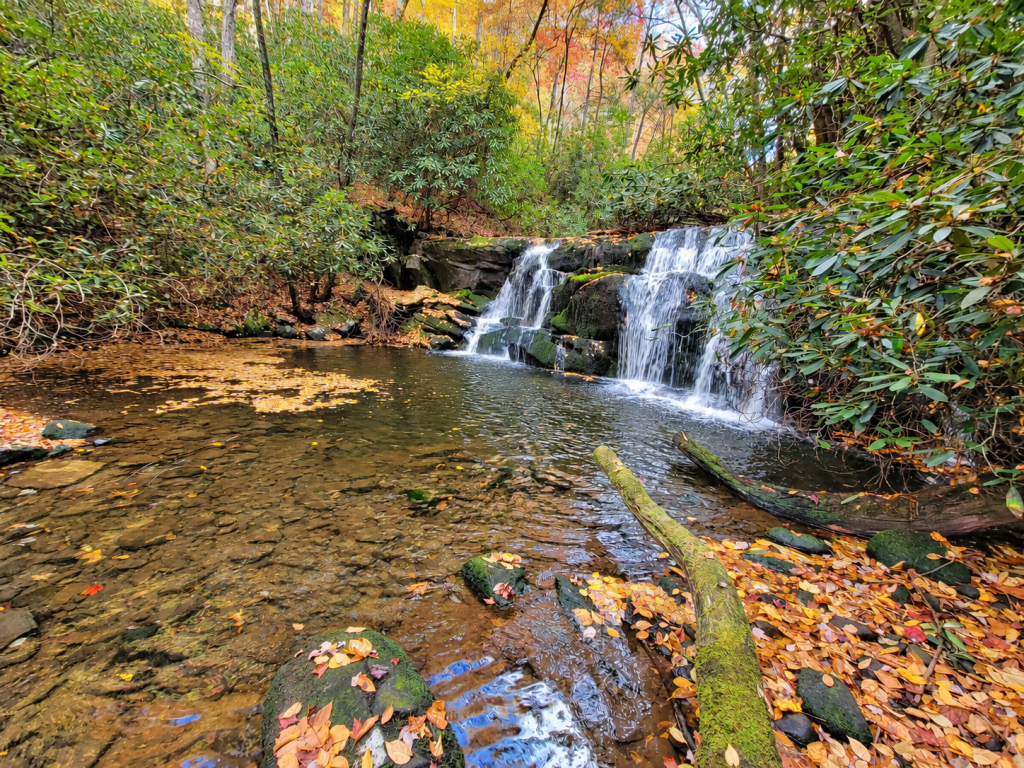
Mountain streams. Rivers. Waterfalls. Small cascades hidden beneath rhododendron.
They’re beautiful throughout the year, but autumn adds another dimension.
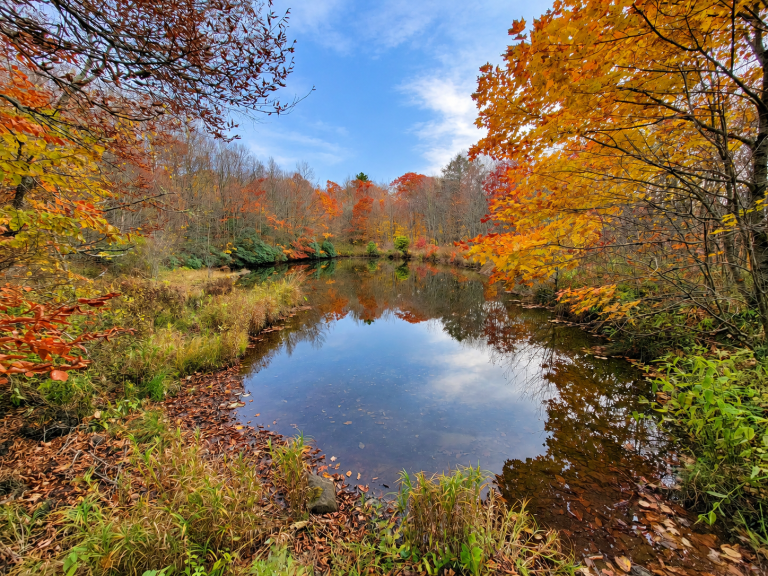
Color reflects from the trees onto moving water. Fallen leaves collect between rocks. A red or yellow leaf floating downstream can become the focal point of an entire photograph.
Water also gives the forest a sense of movement.
The leaves tell us the season is changing.
The stream reminds us that it never stops changing.
The BMT crosses and follows waterways throughout its journey, and some of the trail’s quietest fall moments can be found beside them.
(credit Dave Meeks)
Sometimes One Tree Is Enough
Fall photography naturally encourages us to think big.
We want the grand overlook.
The mountain covered in color.
The photograph that seems to capture October in a single frame.
But some of my favorite images are much simpler.
One brilliant red maple surrounded by green.
A sourwood glowing crimson beside the trail.
Yellow leaves illuminated against a dark forest.
A single leaf resting on moss.
These photographs remind me that the beauty of the BMT is often found in details.
You don’t always need another summit.
Sometimes you just need to stop walking.
(credit Dave Meeks)
The Forest Glows
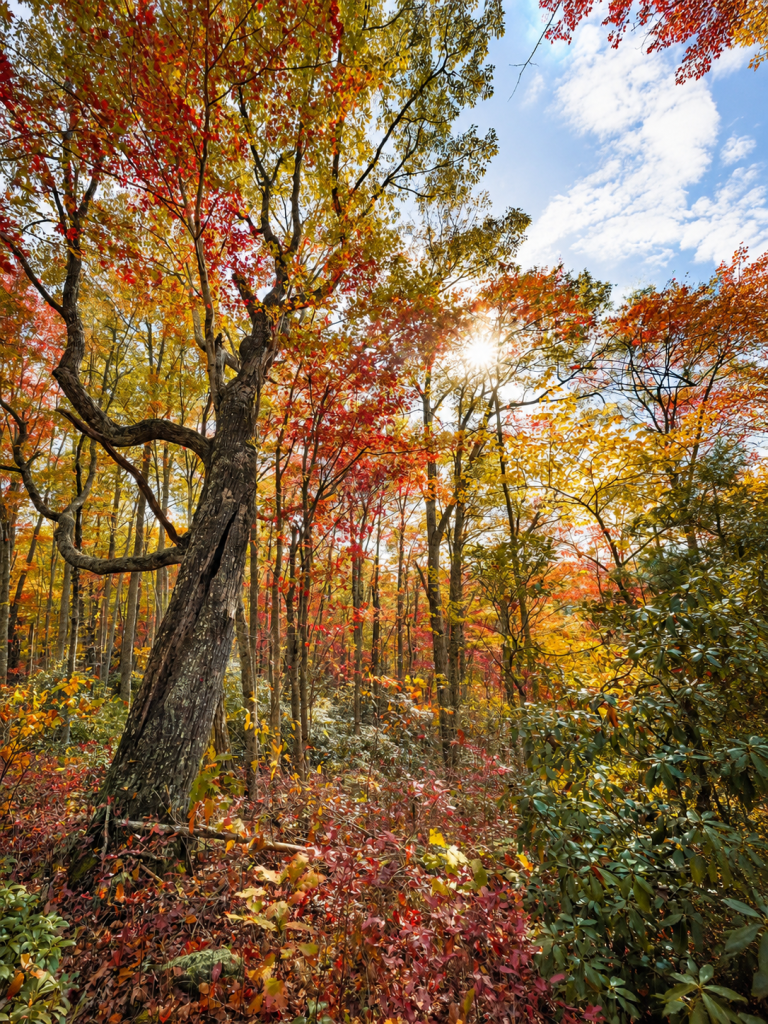
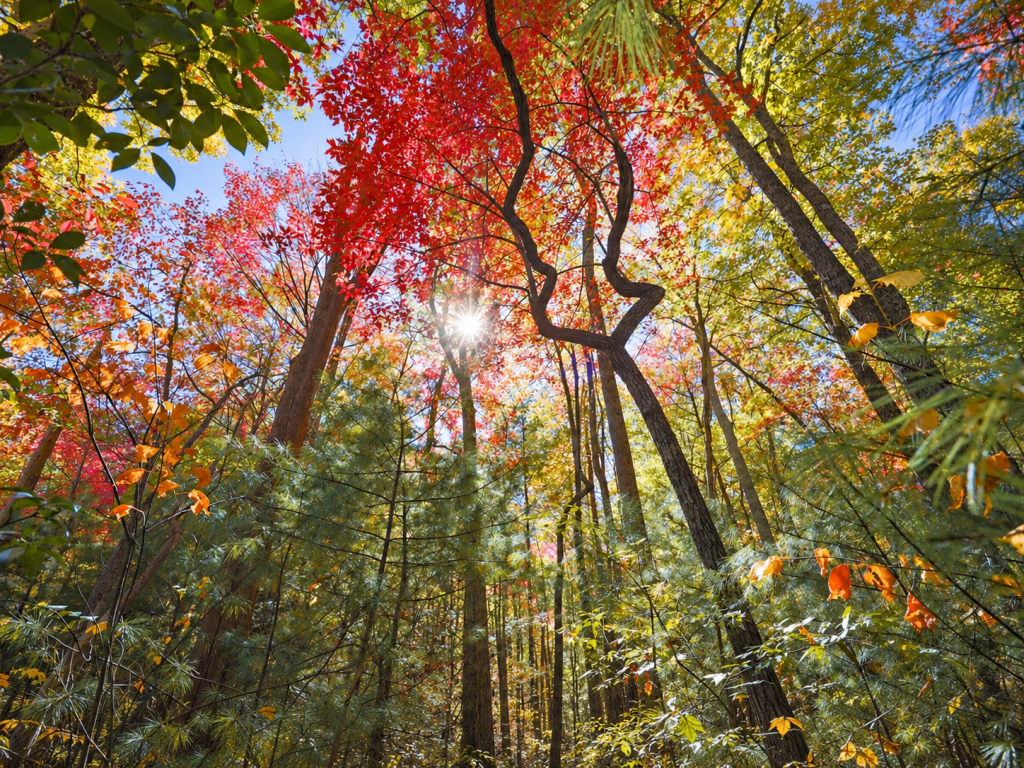
There is a particular kind of light that occurs when sunlight passes through autumn leaves.
Photographers call it backlighting.
I simply think of it as the moment when the forest begins to glow.
Instead of photographing the sunlit side of the leaves, turn toward the light. When the sun shines through yellow, orange, and red foliage, the leaves become almost translucent.
Colors intensify.
Tree trunks fall into shadow.
Even an ordinary section of trail can become extraordinary for a few minutes.
It is another reason I enjoy carrying a camera on the BMT. Photography encourages me to look in directions I might otherwise ignore.
Sometimes the best photograph is behind you.
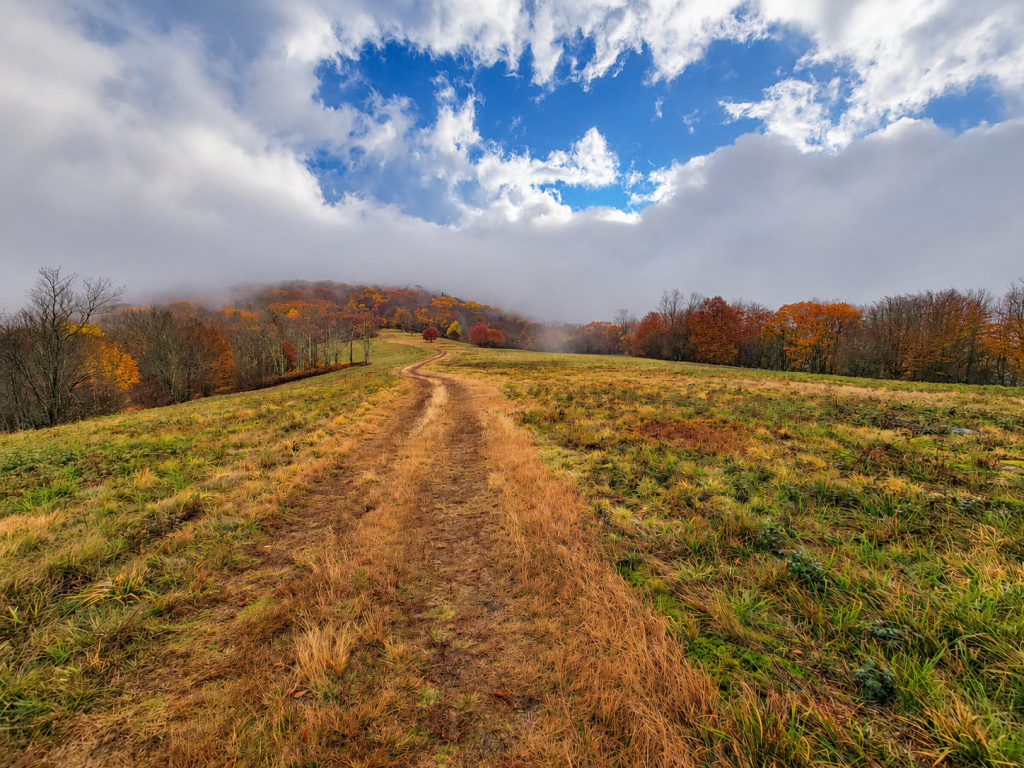
Whigg Meadow (credit Dave Meeks)
Weather Makes the Photograph
Blue skies are wonderful.
But some of the most interesting fall photographs happen when the weather isn’t perfect.
Fog simplifies a landscape.
Clouds soften harsh light.
Rain deepens the colors of leaves and darkens tree bark.
A storm clearing from the mountains can reveal ridges one layer at a time.
I’ve learned not to put the camera away simply because the sun disappears.
In fact, October’s changing weather often creates exactly the atmosphere that makes a photograph memorable.
The mountains don’t have to be postcard-perfect to be beautiful.
Fontana Lake (credit Dave Meeks)
Then There Are the Big Views
Of course, sometimes you reach an overlook on exactly the right October day.
And everything comes together.
The air is clear.
The mountains stretch toward the horizon.
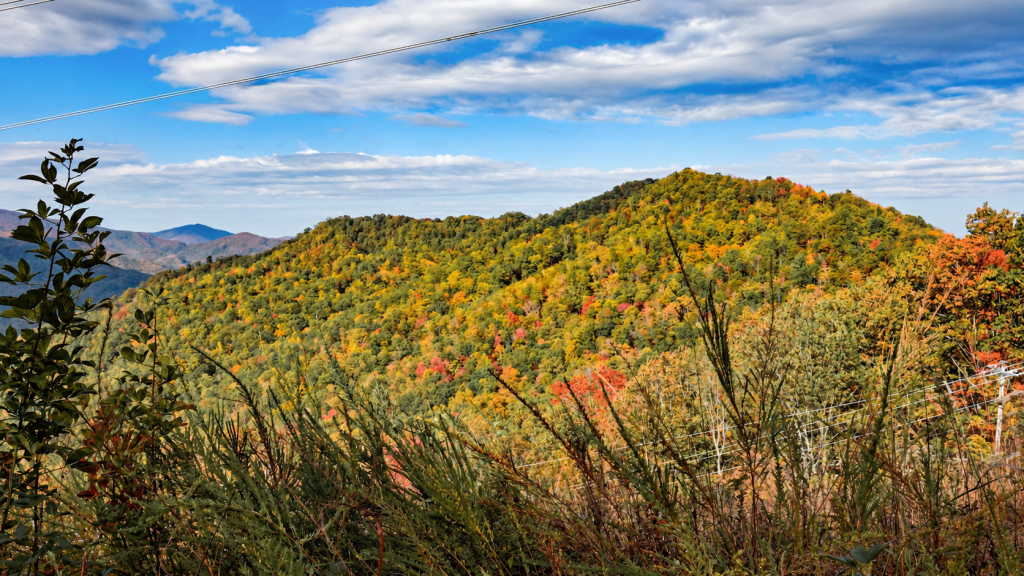
The forest below is a patchwork of red, orange, yellow, green and gold.
Those are the moments that make it difficult to put the camera down.
The Southern Appalachians are particularly beautiful because of their layers. One ridge gives way to another, then another, gradually fading toward the horizon.
Autumn reveals those layers in color.
Standing there, it’s easy to understand why people have worked for generations to protect these mountains—and why trails like the Benton MacKaye matter.
(credit Dave Meeks)
Don’t Forget the Hiker
Landscapes tell part of the story.
People provide scale.
A lone hiker beneath towering hardwoods immediately communicates the size of the forest. Someone crossing a creek turns a pretty landscape into an experience. A backpacker disappearing around a bend makes us wonder where the trail leads next.
Some of my favorite BMT photographs aren’t simply pictures of the trail.
They’re pictures of people experiencing it.
After all, that’s why the trail exists.
Not simply to be photographed.
But to be walked.
Lookout Rock above Fontana, North Carolina section (credit Dave Meeks)
The Photograph I Almost Didn’t Take
Every photographer has them.
The moments when you’re tired.
The camera is already packed away.
The light doesn’t seem quite right.
You’re thinking about the miles remaining rather than the landscape around you.
And then something makes you stop.
Maybe the clouds suddenly open.
Maybe light reaches the forest floor.
Maybe you turn around and discover the view behind you is better than the one you’ve been walking toward.
Some of my favorite photographs began with the thought:
I should probably take one more.
There is a lesson in that beyond photography.
The BMT rewards curiosity.
Look around the next bend.
Stop beside the creek.
Turn around occasionally.
Stay for another minute.
The mountains often save something for those who aren’t in a hurry.
Hemptop, Georgia section (credit Dave Meeks)
When the Leaves Are Gone
Eventually, October’s show begins to close.
A windy night can strip leaves from a ridge that seemed to be at peak color only a day earlier.
The forest floor becomes covered in leaves.
The canopy opens.
Views that have been hidden since spring begin appearing between the trees.
And another version of the BMT emerges.
I’ve come to appreciate that stage of fall, too.
The bare branches reveal the shape of the mountains. Cooler air settles into the valleys. The trail becomes quieter.
Autumn isn’t ending so much as moving into its next phase.
That’s something a photograph can capture—but being there captures even more.
(credit Dave Meeks)
Fall Through My Lens
Photography has changed the way I experience the Benton MacKaye Trail.
It has taught me to notice light.
To watch the weather.
To study the trees.
To appreciate a single leaf as much as an entire mountainside.
And perhaps most importantly, it has taught me to slow down.
That may be what I enjoy most about photographing fall.
October puts on an extraordinary show, but it doesn’t happen all at once. Every hike offers something different. Every bend in the trail changes the composition. Every morning brings different light.
Next October, the mountains will do it all again.
But never exactly the same way.
So bring your camera if you have one.
Bring your phone if you don’t.
But occasionally, put both away.
Stand quietly on the trail.
Look at the color.
Listen to the leaves.
Feel the cool air.
Some of the best images from a day on the Benton MacKaye Trail are the ones you bring home only in your memory.
(credit Dave Meeks)
Help Leave a Footpath for Generations to Follow
The beauty of the Benton MacKaye Trail doesn’t happen by accident. Nearly 300 miles of trail require the time, work, and generosity of people who believe wild places are worth protecting. BMTA volunteers clear blowdowns, maintain tread, trim vegetation, replace signs and blazes, build and repair trail structures, and help keep the BMT open for everyone who follows. Benton MacKaye Trail Association
Love the trail? Help care for it.
Join the BMTA — Membership helps support the ongoing work to protect, preserve, and maintain the Benton MacKaye Trail.
Volunteer & Maintain the Trail — Join a maintenance trip, lend a hand on the trail, or learn about becoming a section maintainer. No previous trail-maintenance experience is necessary.
Donate to the BMTA — Donations help provide tools, safety equipment, materials, volunteer training, and funding for larger projects that protect and improve the trail. Benton MacKaye Trail Association
Every membership, every volunteer hour, and every donation helps ensure that the Benton MacKaye Trail remains a wild and wonderful footpath for generations to come.





 Subscribe via RSS