How erosion control, drainage, blowdowns, and reroutes help protect the places we love
For many people, the word conservationbrings to mind protected land, wildlife habitat, native plants, or clean water. All of that is part of the picture. But out on the Benton MacKaye Trail, conservationalso looks like volunteers clearing drains, removing blowdowns, repairing tread, and working carefully through steep, wet, or heavily worn sections of trail.
That kind of work may look like simple maintenance at first glance. But anyone who has spent time on a trail crew knows it is much more than that.
Trail maintenance helps protect the land the trail passes through. It helps keep soil in place, keeps water flowing where it should, reduces damage to vegetation, and prevents foot traffic from spreading beyond the tread. It protects not only the hiking experience, but the health of the forest itself.
That is why trail maintenance is not separate from conservation work. On a trail like the BMT, it is one of the most practical forms of conservation there is.
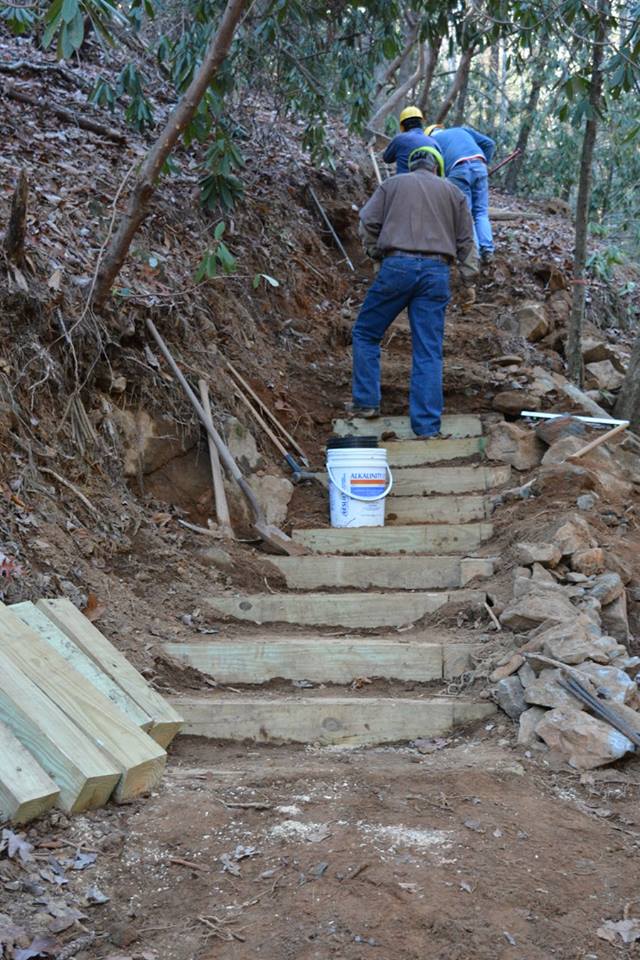
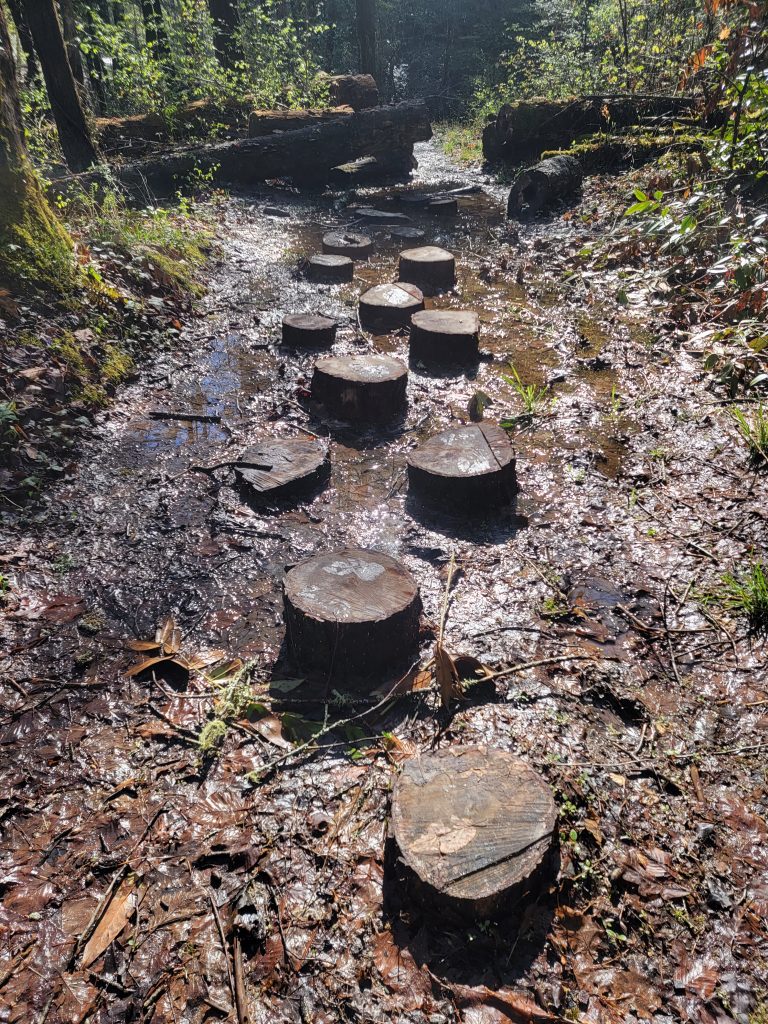
Staircase creation
A Good Trail Protects More Than Access
The Benton MacKaye Trail exists to help people experience some of the most beautiful landscapes in the Southern Appalachians. But a trail also does something else that matters just as much: it helps contain human impact.
When a trail is well built and well-maintained, hikers tend to stay on it. The tread is clear. Water moves off the trail instead of down it. Obstacles are addressed before people begin going around them. The surrounding woods, slopes, and streambanks are spared the wider damage that comes when a trail starts to unravel.
When maintenance slips, the forest feels it. Muddy spots widen. Social paths form around obstacles. Erosion deepens. What should be a narrow corridor of travel can become a broader zone of disturbance.
Keeping a trail in shape is one of the ways we protect the landscape around it.
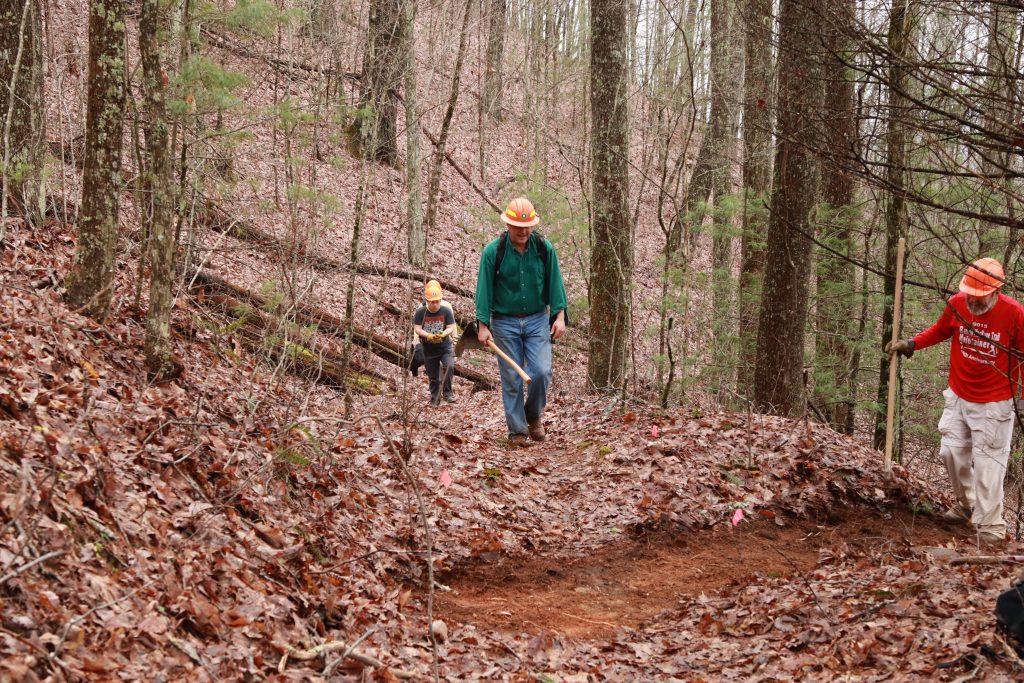
Treadwork
Erosion Control Protects Soil, Streams, and Habitat
One of the clearest examples of trail maintenance as conservation work is erosion control.
In the mountains, water is always at work. When it starts using a trail as a channel, it can wear the tread down quickly. A small rut can become a trench. Soil loosens and washes downhill. Roots are exposed. Slopes become less stable. And that displaced soil often ends up where it does not belong: in drainages, creeks, and streams.
That affects more than the trail itself. It can affect water quality, stream habitat, and the plants growing along the corridor.
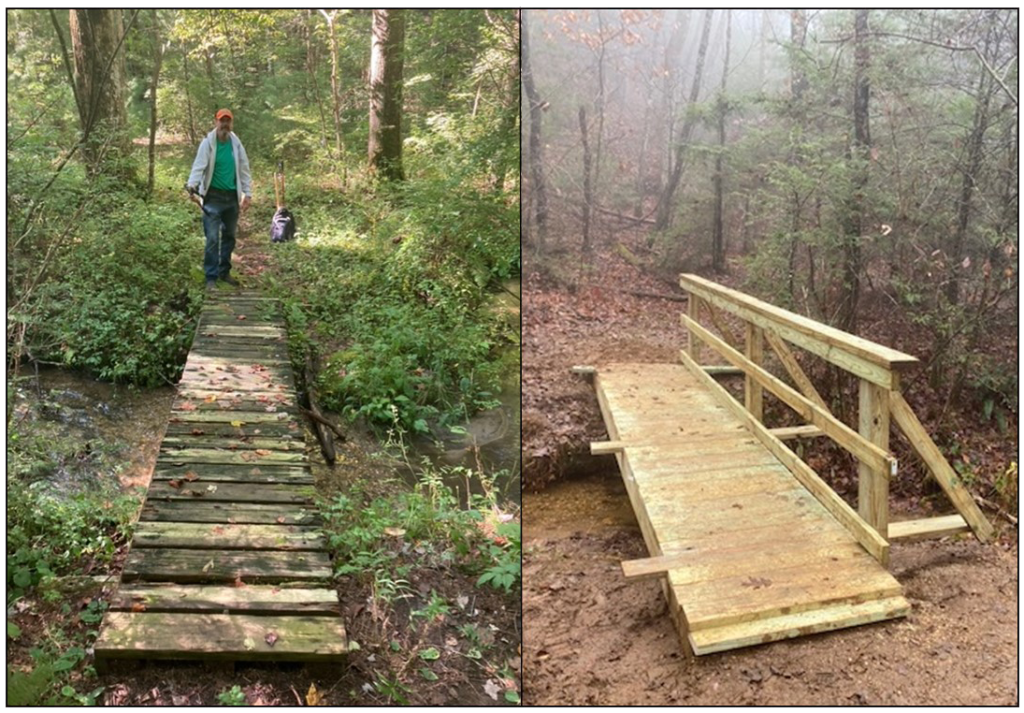
So when BMTA volunteers restore tread, improve outslope, reinforce worn sections, or address widening in problem areas, they are doing more than making the trail easier to walk. They are helping protect the land and water connected to that trail.
Keeping soil in place is conservation. Keeping sediment out of streams is conservation. Preventing damage from spreading beyond the tread is conservation.
Installing a waterbar
Drainage Work Is Some of the Most Important Work We Do
Drainage work may not be the most visible part of trail maintenance, but it is some of the most important.
A sustainable trail depends on water leaving the tread quickly and naturally. When drains clog or water can no longer sheet off the trail, it begins to concentrate. Once that happens, erosion usually follows.
That is why trail crews spend so much time clearing drains, restoring outslope, maintaining grade reversals, and making sure water can keep moving off the trail corridor the way it was meant to. It is not glamorous work, but it is essential work.
On a trail like the BMT, which crosses steep slopes, ridgelines, coves, and countless drainages, good water management is one of the keys to protecting both the trail and the ecosystem around it. In many places, drainage work is not just trail work. It is watershed protection in real, practical terms.
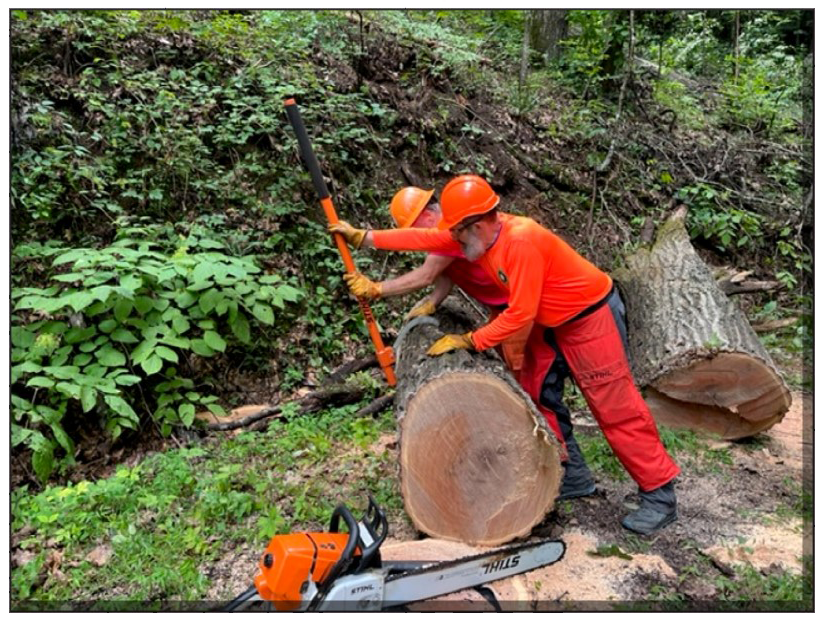
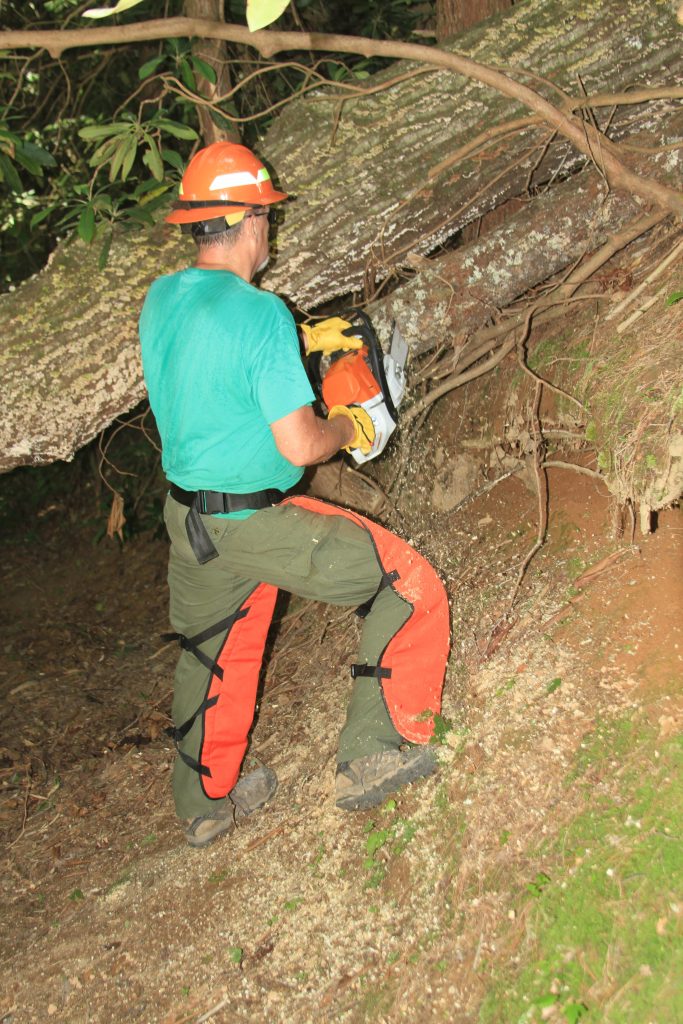
Moving a freshly cut blowdown
Blowdowns Are Not Just a Trail Problem
Anyone who works on trail in the Southern Appalachians knows blowdowns are part of the job. After storms, heavy winds, or saturated ground, trees come down. Sometimes they fall cleanly across the tread. Other times they create a tangled mess of trunks, limbs, and debris.
At first, a blowdown may seem like just an access issue. But left unaddressed, it can quickly become a conservation issue too.
Most hikers will not climb through a difficult tangle or scramble over a large log if there is another option. They go around it. Before long, a simple workaround becomes a bypass trail. Then another one forms beside it. Vegetation gets trampled. Roots are exposed. The trail corridor widens.
Blowdowns can also affect drainage by trapping leaves, runoff, and sediment, sometimes redirecting water in ways that create muddy areas or new erosion problems.
That is why clearing blowdowns matters so much. It is not just about reopening the trail. It is about preventing one fallen tree from causing a larger pattern of impact on the forest floor around it.
When BMTA volunteers head out after storms with saws and hand tools, they are doing more than cleanup. They are helping stop short-term damage from becoming long-term disturbance.
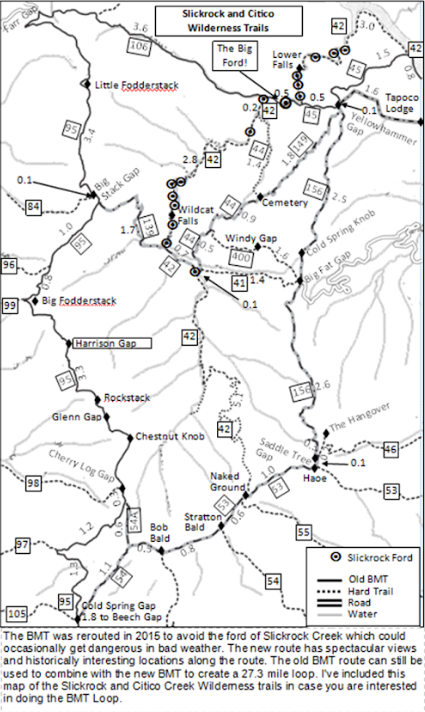
Map shows pre 2015 route and reroute of BMT around Slickrock Wilderness
Sometimes the Best Way to Protect a Place Is to Move the Trail
Not every problem section can be solved by routine maintenance. Some older trail alignments simply are not sustainable over time. They may climb too steeply, cross wet ground, or sit in places where erosion will keep returning no matter how much work is done.
In those cases, a reroute can be the best conservation choice.
A thoughtfully planned reroute moves the trail onto more durable terrain with better drainage and a gentler grade. That protects the surrounding ecosystem, improves the hiking experience, and gives the old damaged section a chance to recover.
For hikers, a reroute may just feel like a change in path. But from a stewardship standpoint, it is often an investment in the long-term health of the landscape.
Large crews make light work
Trail Stewardship Helps Preserve the Character of the BMT
One of the special things about the Benton MacKaye Trail is the feeling it gives you: of moving through wild country, of traveling through forests and ridges that still feel whole, quiet, and cared for.
That feeling is not preserved by accident.
A badly eroded trail, a maze of bypasses, or repeated damage from unmanaged blowdowns changes how a place feels. It makes the strain on the landscape visible. It reminds you that the trail corridor is under pressure.
A well-maintained trail does the opposite. It helps the route sit more lightly on the land. It allows people to pass through with less impact. It helps preserve not only ecological health, but also the sense of wildness and respect that draws people to the BMT in the first place.
Volunteers make the difference
This Work Happens Because Volunteers Keep Showing Up
At BMTA, trail maintenance is powered by people who care deeply about these mountains and are willing to put in the work to protect them.
That work is not always dramatic. Often it is repetitive, muddy, technical, and physically demanding. It means returning to the same sections again and again. Clearing the same drains. Cutting out the next blowdown. Fixing the tread before a small problem becomes a major one.
But this kind of consistency is exactly what conservation requires.
Every workday on the trail helps protect something larger than the trail itself. It protects the woods around it. It protects streams below it. It protects the experience future hikers will have when they come through.
That is one of the clearest expressions of stewardship there is.
Blowdown work at dusk
Trail Maintenance Really Is Conservation Work
On the Benton MacKaye Trail, trail maintenance is not just about access. It is not just about convenience. And it is not just about keeping the path open.
It is about caring for the land.
When volunteers manage erosion, improve drainage, clear blowdowns, and help reroute unsustainable sections, they are protecting soil, water, habitat, and the long-term integrity of the trail corridor. They are helping people experience these mountains in a way that does less harm and shows greater respect.
So the next time you hike a section of clear tread, step over a drainage feature doing its job, or pass through a corridor recently cleared after a storm, it is worth remembering what you are seeing.




 Subscribe via RSS