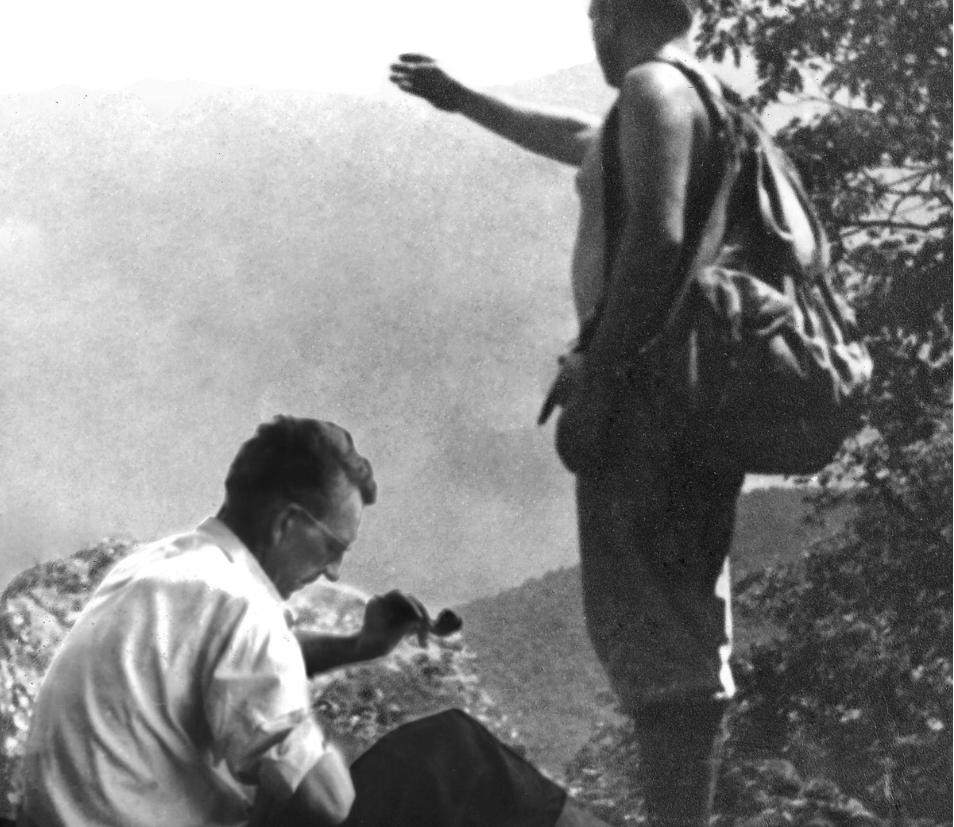
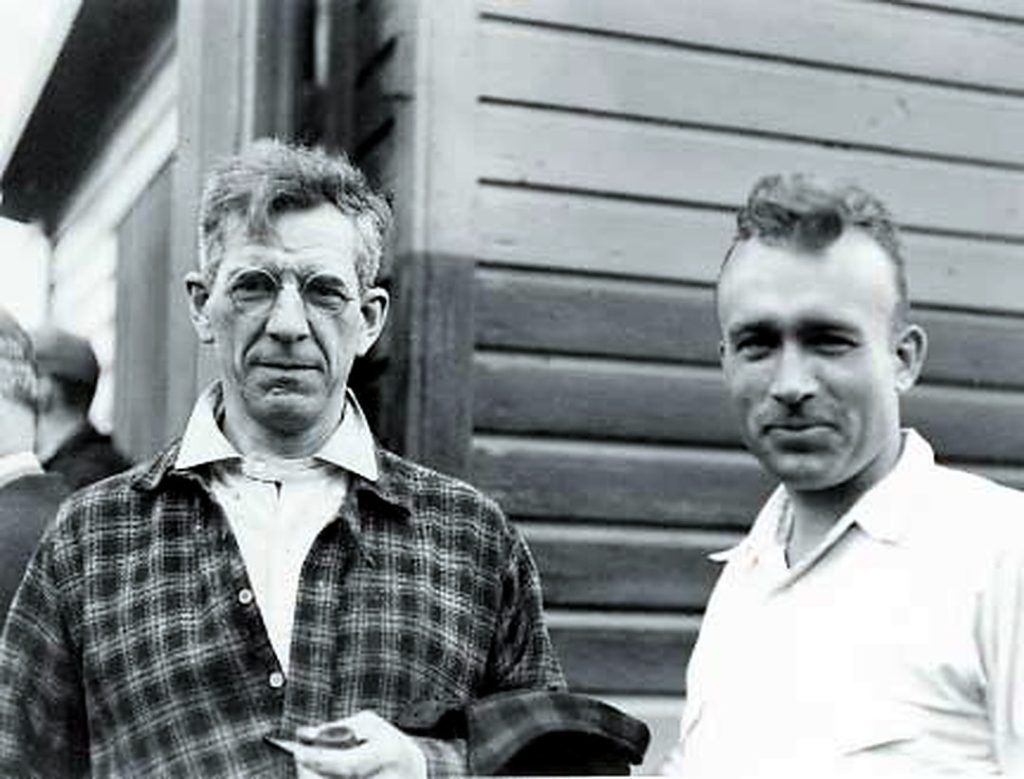
A two-photo composite. Left: Benton MacKaye reads while sitting on Eagle Rock near Jacksboro, Tennessee; Right: Myron Avery points to the horizon from Shenandoah National Park in 1938. (Photo credit: Appalachian Trail Conservancy Archives photos)
Editor’s Note: This article was inspired in part by the Appalachian Trail Conservancy’s outstandingJourneys Fall 2021 issue commemorating the 100th anniversary of Benton MacKaye’s 1921 proposal for the Appalachian Trail, particularly the essays by David B. Field, Brian B. King, James N. Levitt, and Larry Anderson.
“The trail is the entrance.” — Benton MacKaye
On a busy fall weekend, it’s not unusual for parking lots at popular trailheads across the Southern Appalachians to fill before sunrise. Iconic overlooks draw long lines of hikers waiting for a photograph. Social media can transform an obscure waterfall into a destination almost overnight, while land managers struggle to balance growing visitation with protecting the very places people have come to enjoy.
These may seem like uniquely modern challenges.
Yet more than a century ago, Benton MacKaye anticipated many of them.
He wasn’t predicting Instagram, smartphones, or the explosive growth of outdoor recreation. But he understood that if Americans lost their connection to wild landscapes—or if those landscapes became consumed by development and overuse—something essential would be lost.
That concern became the foundation for one of the most influential conservation ideas in American history.
Today, nearly everyone associates Benton MacKaye with the Appalachian Trail. Fewer realize that the trail was never his ultimate goal. In fact, MacKaye believed the footpath itself was only the beginning. As he often explained, “the trail is the entrance.”
The entrance to what?
To a different way of thinking about nature, community, and the relationship between people and the land.
More than one hundred years later, those ideas feel remarkably modern.
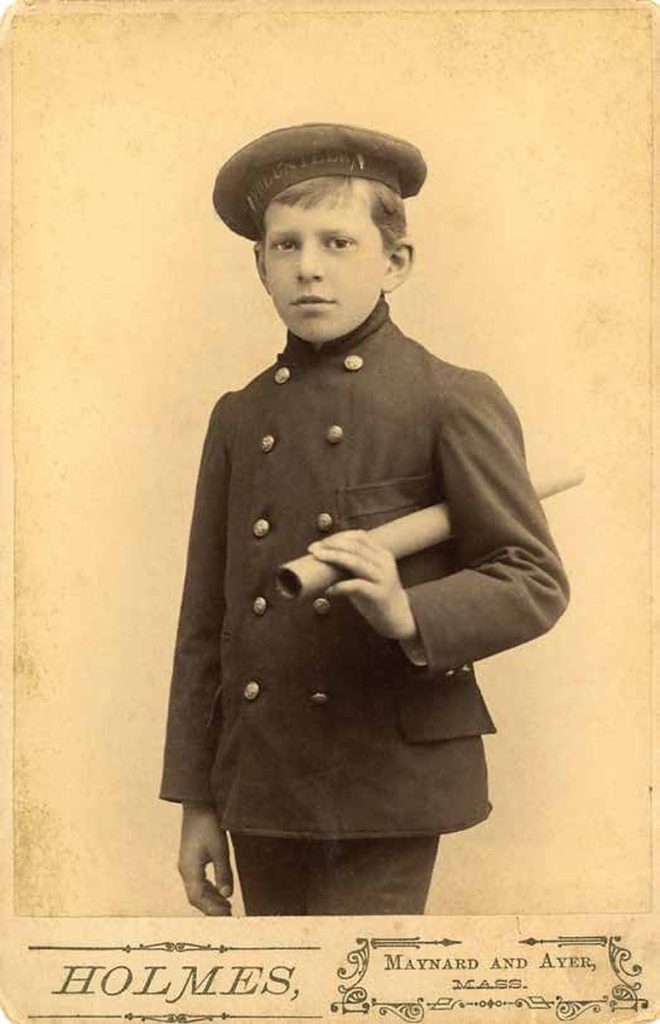
Benton MacKaye at age 10, 1889 (credit Shirley Historical Society and Appalachian Trail Museum; reproduced in A.T. Journeys, Fall 2021)
America was changing rapidly. Factories were reshaping cities. Highways and automobiles were beginning to transform the countryside. Industrialization was improving lives in many ways, but MacKaye believed something important was disappearing in the process.
People were becoming disconnected—from nature, from one another, and from the rhythms of the land.
MacKaye was uniquely prepared to recognize the problem.
Born in 1879, he studied forestry at Harvard, worked for the U.S. Forest Service, became an accomplished regional planner, and eventually helped found The Wilderness Society. His career crossed disciplines that today often exist separately: ecology, economics, sociology, conservation, and public policy.
Looking back on his life’s work years later, MacKaye remarked that all of his varied occupations had really been attempts to make the earth “more fair and habitable.”
That single phrase captures his philosophy better than any job title ever could.
MacKaye wasn’t trying to preserve wilderness simply because it was beautiful.
He believed healthy landscapes helped create healthy societies.
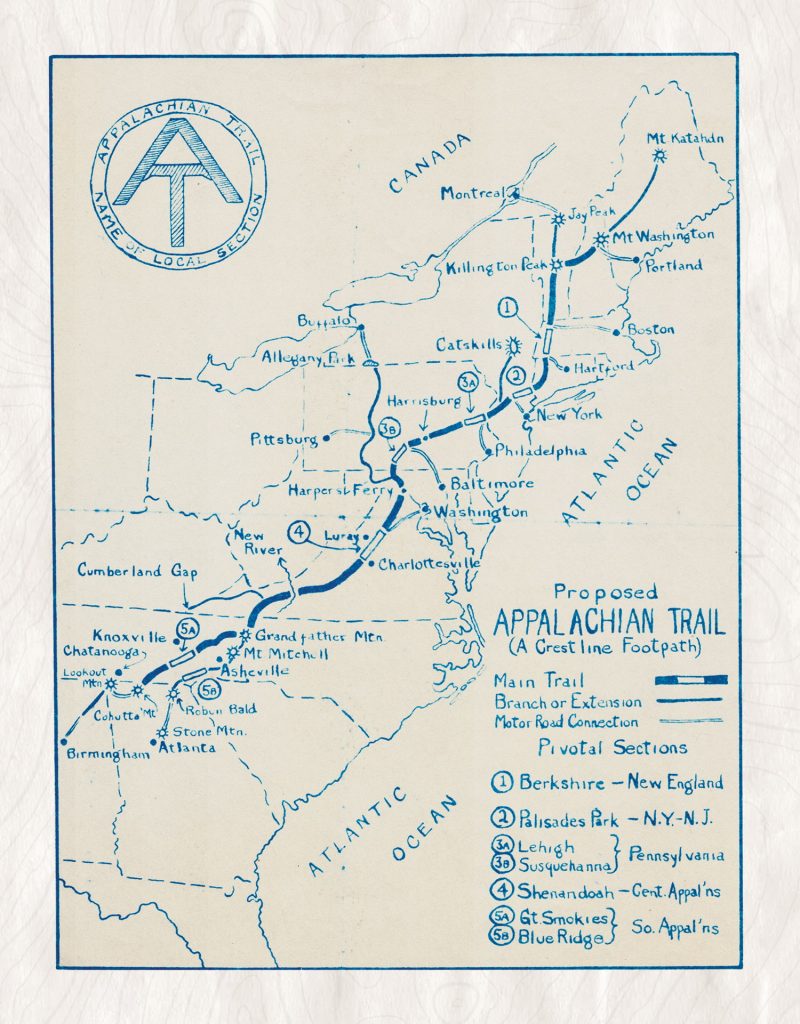
Proposed Appalachian Trail map believed to date to 1922
(credit Appalachian Trail Conservancy Archives)
A Radical Idea
It’s easy to forget how revolutionary MacKaye’s proposal was.
The Appalachian Mountains already existed. Trails already existed. Parks already existed.
What MacKaye imagined was something entirely different.
He envisioned a connected green corridor stretching the length of the Appalachian Mountains—a place where forests, rivers, wildlife, rural communities, and people could coexist in balance.
The hiking trail was simply the thread that would tie the landscape together.
His proposal included ideas that still sound remarkably current:
Conserving large, connected landscapes
Protecting mountain watersheds
Supporting rural communities
Providing opportunities for recreation and renewal
Encouraging people to understand nature rather than simply pass through it
This wasn’t recreation for recreation’s sake.
MacKaye believed time outdoors could restore both individuals and society.
Long before researchers began measuring the health benefits of time in nature, he understood that wild places changed people.
BMT above Fontana Lake (credit Dave Meeks)
The Mountains as an Antidote
MacKaye often wrote about what he called the “metropolitan invasion.”
He wasn’t attacking cities themselves.
In fact, he appreciated cities as centers of culture, education, and commerce.
What concerned him was their unchecked expansion into forests, farms, and mountain landscapes.
Roads reached farther.
Development spread wider.
Commercialization followed.
He feared Americans were gradually losing access to places where they could experience quiet, solitude, and self-reliance.
His answer wasn’t to retreat permanently from civilization.
It was to create places where civilization and wilderness remained in healthy balance.
The Appalachian Mountains, he believed, offered exactly that opportunity.
The trail would become an entrance—not simply into the forest, but into another way of living and thinking.
Benton MacKaye and Myron Avery in a rare photograph together
(Appalachian Trail Conservancy Archives; reproduced in Trail Years)
Enter Myron Avery
If Benton MacKaye supplied the vision, Myron Avery supplied the momentum.
The two men could hardly have been more different.
MacKaye was thoughtful, philosophical, and often more interested in ideas than deadlines.
Avery was an attorney, organizer, and relentless administrator whose greatest talent was turning ambitious plans into completed projects.
Their partnership would ultimately create one of America’s greatest conservation achievements.
It would also become one of the most fascinating relationships in the history of American trails.
Avery himself once described MacKaye as a “forester, philosopher and dreamer.”
It was meant as a compliment.
It was also an acknowledgment that dreamers need builders.
During the 1920s, MacKaye helped organize conferences, recruit supporters, identify routes, and persuade government agencies that a long-distance trail was possible.
But as the project grew, it demanded something different.
It needed someone willing to coordinate dozens of hiking clubs, negotiate with public officials, inspect proposed routes, resolve disagreements, and keep pushing the work forward.
That person was Myron Avery.
In 1931, Avery became chairman of the Appalachian Trail Conference. Over the next several years he transformed an ambitious idea into a nearly continuous footpath.
He hiked countless miles, recruited volunteers, assigned maintenance responsibilities, inspected routes personally, and insisted that progress continue.
If MacKaye imagined the destination, Avery built the road that led there.
Different Visions of Success
At first, the two men worked toward the same goal.
Over time, however, subtle differences became fundamental disagreements.
To Avery, success meant completing a continuous trail from Georgia to Maine.
To MacKaye, the trail itself was never enough.
He worried that the original purpose of the project could be lost if too much attention focused on simply connecting miles of footpath.
The landscape surrounding the trail mattered just as much as the tread beneath a hiker’s boots.
Protecting forests.
Safeguarding watersheds.
Preserving opportunities for solitude.
Building communities that existed in harmony with the mountains.
These weren’t side benefits.
They were the reason the trail existed in the first place.
The footpath was only the entrance.
The landscape beyond it was the destination.
That philosophical difference would eventually reshape their friendship—and leave a lasting mark on the future of America’s trails.
The growing philosophical divide between Benton MacKaye and Myron Avery came into sharp focus during one of the most consequential conservation debates of the 1930s.
To many Americans, the new scenic roadway through Virginia’s Blue Ridge Mountains represented progress. It opened spectacular mountain landscapes to families who might never hike long distances. Visitors could experience sweeping vistas from the comfort of an automobile.
MacKaye saw something different.
He worried that roads built along the very ridgelines that inspired hikers would fundamentally change the character of those mountains. His concern wasn’t simply about automobiles. It was about what happened when convenience became the primary measure of success.
For MacKaye, the Appalachian Trail represented an alternative to the pace of modern life—not an extension of it.
Avery viewed the situation differently.
His goal was to complete a continuous footpath. If cooperation with government agencies and road projects helped achieve that objective, he was willing to accept compromises that MacKaye found troubling.
Neither man was wrong.
They were answering different questions.
MacKaye asked, “What kind of landscape are we trying to protect?”
Avery asked, “How do we actually make this trail exist?”
History would prove that America needed both questions.
Without MacKaye, there may never have been a vision.
Without Avery, that vision might never have become a trail.
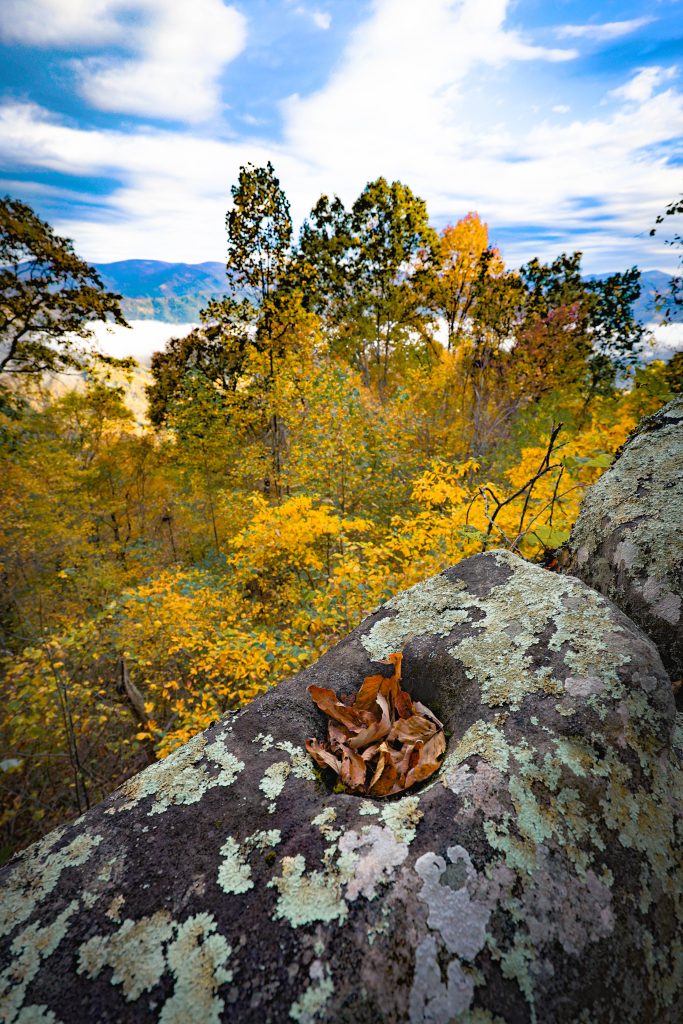
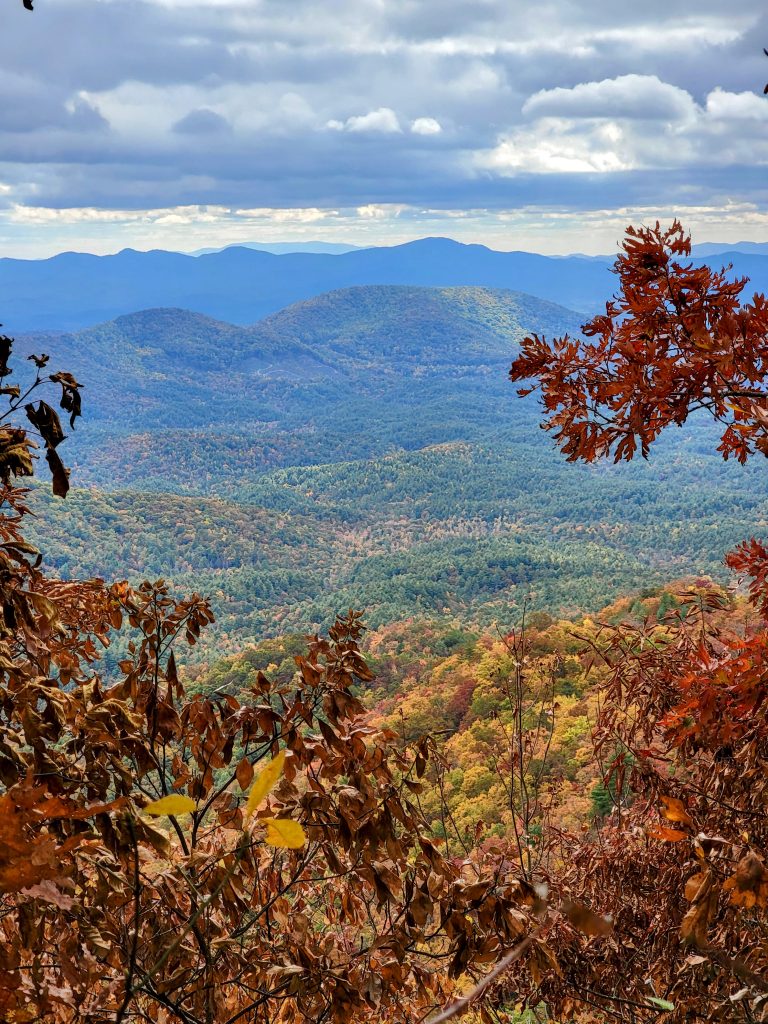
Views from BMT in Tennessee (credit Dave Meeks)
An “American Sanctuary”
As their paths diverged, MacKaye never abandoned the larger ideals that had inspired him from the beginning.
In a message to the Appalachian Trail Conference, he described the effort as creating an “American sanctuary”—a place where forests, birds, wildlife, and people could all flourish together.
That phrase reveals something important about his understanding of conservation.
MacKaye never believed protecting nature was only about preserving scenery.
Healthy forests protected clean water.
Open spaces gave communities room to breathe.
Trails invited people to develop a relationship with the land that could not be found from behind a windshield or through a photograph.
Nature was not separate from human well-being.
It was essential to it.
Perhaps that is why his writings continue to resonate today. They remind us that conservation is ultimately about people as much as places.
Questions That Still Matter
Nearly one hundred years have passed since MacKaye first proposed the Appalachian Trail.
The world has changed dramatically.
Americans spend more time indoors than ever before. Smartphones place endless information—and endless distractions—in our pockets. Outdoor recreation has grown at an extraordinary pace, introducing millions of people to hiking, backpacking, and public lands.
That growth has brought tremendous benefits.
More people appreciate forests.
More families discover the outdoors.
More citizens support conservation.
Yet success has created new challenges.
Popular trailheads overflow with vehicles on weekends.
Well-loved destinations struggle with erosion.
Social media can concentrate thousands of visitors on a handful of scenic locations while equally beautiful places remain largely unknown.
Land managers work tirelessly to balance public access with protecting fragile ecosystems.
MacKaye would recognize the dilemma immediately.
He believed wild places should welcome people—but he also believed they should remain capable of providing solitude, reflection, and renewal.
Those goals require stewardship.
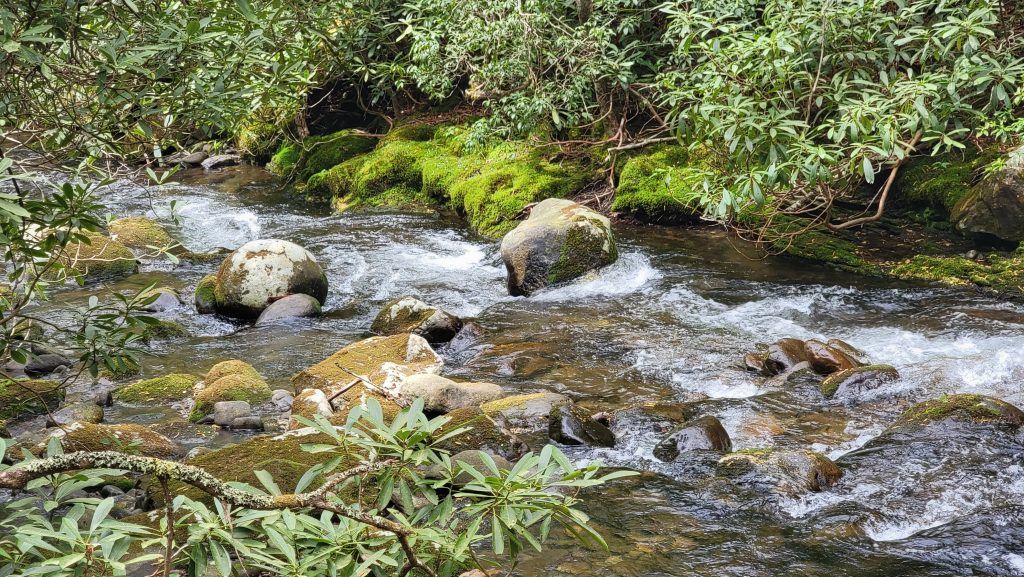
Noland Creek along the BMT, North Carolina (credit Dave Meeks)
The Benton MacKaye Trail Today
It is fitting that the trail bearing MacKaye’s name reflects so many of the values he championed.
Unlike some of the country’s most heavily traveled long-distance trails, the Benton MacKaye Trail still offers something increasingly rare.
Quiet.
Much of the BMT winds through national forests, designated wilderness, Great Smoky Mountains National Park, and remote mountain landscapes where hikers can walk for hours listening only to birdsong, rushing water, and wind moving through the trees.
That experience isn’t accidental.
It exists because generations of volunteers, public agencies, partner organizations, and private landowners have worked together to protect it.
The Benton MacKaye Trail Association embodies exactly the kind of community MacKaye believed was necessary for conservation to succeed.
Every trail maintained.
Every bridge repaired.
Every blowdown removed.
Every educational hike.
Every new member.
Every volunteer hour.
Together they preserve far more than a hiking trail.
They preserve an idea.
The Trail Is Still the Entrance
One of MacKaye’s most enduring observations was that “the trail is the entrance.”
It is a deceptively simple statement.
At first glance, it appears to describe little more than a footpath leading into the woods.
But MacKaye meant something much deeper.
The trail is an entrance into slower rhythms.
Into healthier communities.
Into cleaner water and protected forests.
Into an understanding that people are part of nature—not separate from it.
Every hike offers an opportunity to leave behind noise, schedules, notifications, and deadlines.
The farther we walk, the more the mountains begin to set the pace.
That was always MacKaye’s hope.
Not that people would conquer wilderness.
But that wilderness would quietly reshape people.
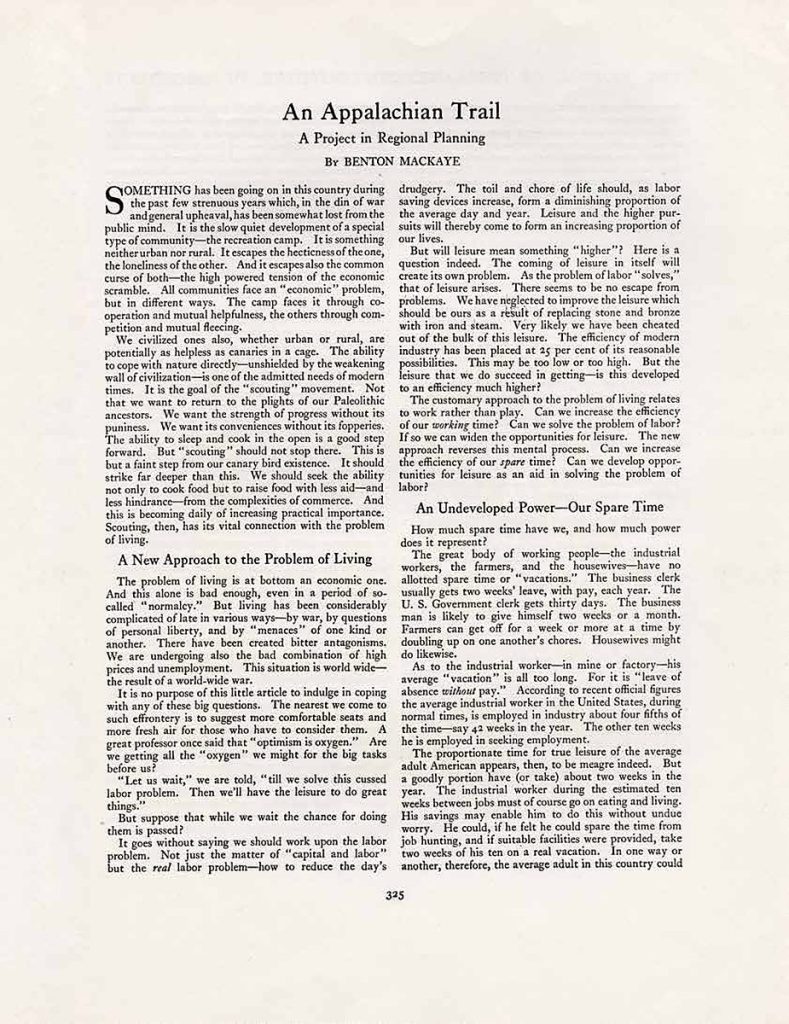
First page of “An Appalachian Trail: A Project in Regional Planning,” 1921
(Journal scan reproduced by Appalachian Trail Conservancy in A.T. Journeys, Fall 2021
)
A Legacy Worth Carrying Forward
One of the great ironies of Benton MacKaye’s life is that he is often remembered simply as “the father of the Appalachian Trail.”
The title is deserved.
But it barely hints at the scope of his thinking.
He wasn’t trying to create America’s most famous footpath.
He was asking what kind of country America wanted to become.
Could economic progress coexist with conservation?
Could communities thrive without consuming every remaining wild landscape?
Could people find renewal not through constant consumption, but through meaningful experiences in nature?
Those questions remain remarkably relevant.
Perhaps even more so than when he first asked them.
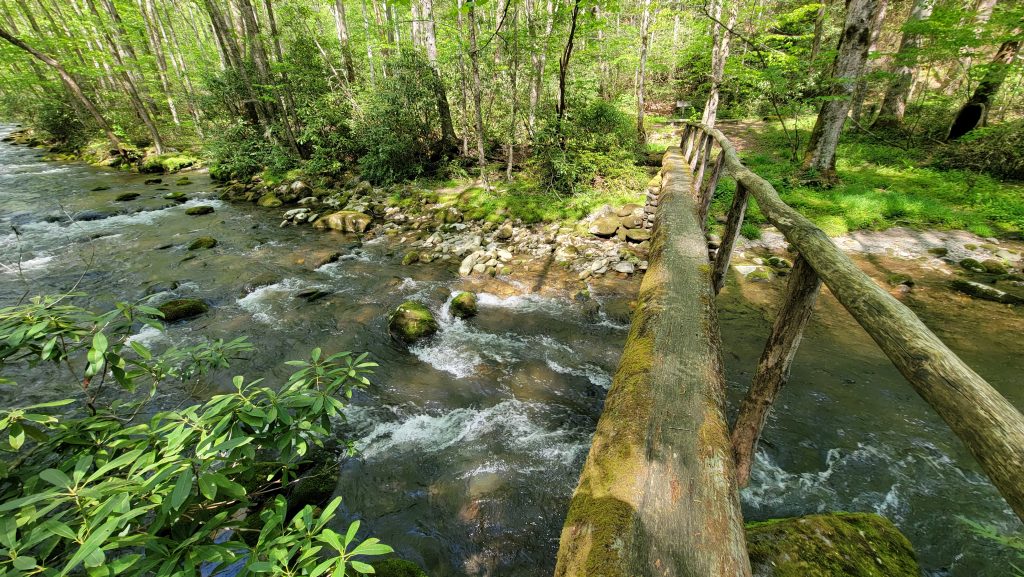
BMT Crossing one of the many creeks in the Smokies section (cedit Dave Meeks)
Walking the Vision
Every person who steps onto the Benton MacKaye Trail becomes part of MacKaye’s unfinished vision.
Some come to backpack for a week.
Others hike a few miles on a Saturday morning.
Some volunteer with crosscut saws and Pulaskis.
Others introduce grandchildren to their first trail.
All are participating in something much larger than recreation.
They are helping sustain a landscape where people and nature continue to shape one another.
Myron Avery demonstrated what determined leadership could accomplish.
Benton MacKaye reminded us why the work mattered.
The Benton MacKaye Trail exists today because both legacies endure.
One supplied the vision.
The other supplied the determination.
Together they created more than a trail.
They created an enduring invitation.
An invitation to slow down.
To pay attention.
To care for places that ask nothing of us except respect.
And perhaps most importantly, to remember that the true destination is not the next overlook or mountain summit.
It is becoming better stewards of the landscapes—and one another—that make those journeys possible.
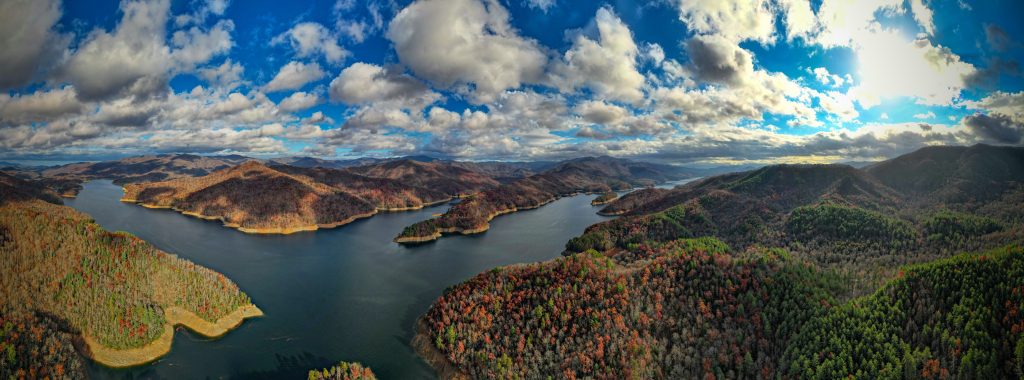
Fontana Lake looking north into the Smokies section of the BMT (credit Dave Meeks)
How You Can Help
Every time you hike the Benton MacKaye Trail, you become part of a story that began more than a century ago.
What you can do now to help carry Benton MacKaye’s vision forward:


 Subscribe via RSS