
Hiking the BMT with Dogs: Tips, Rules & Trail Etiquette
From shaded forests and mountain streams to quiet ridgelines, the Benton MacKaye Trail offers wonderful opportunities to explore the Southern Appalachians with your four-legged companion. But a successful adventure begins with knowing the rules, choosing the right trail, and keeping your dog safe.
There’s something special about hiking with a dog.
Maybe it’s the enthusiasm at the trailhead, the nose that finds something fascinating every few feet, or the way a familiar trail becomes an entirely new adventure when experienced alongside a four-legged friend.
Dogs remind us to appreciate the simple pleasures of being outdoors.
And for many hikers, the best days on the trail are the ones shared with a canine companion.
The Benton MacKaye Trail (BMT), stretching approximately 288 miles through Georgia, Tennessee, and North Carolina, offers beautiful opportunities for hiking with dogs. Its remote forests, mountain streams, and quiet pathways are especially appealing to those seeking an escape from crowded trails.
But hiking with a dog introduces responsibilities beyond packing an extra water bottle.
Not every section permits dogs. Not every trail suits every dog. And even the friendliest canine can unintentionally disturb wildlife or make other hikers uncomfortable.
With a little planning, however, hiking with your dog can be one of the most rewarding ways to experience the BMT.

First, Know Where Dogs Are Allowed
Dogs are welcome on much of the Benton MacKaye Trail—but not all of it.
The BMT crosses lands managed by different public agencies, and regulations change along the way.
National Forest sections: Leashed dogs are generally permitted on BMT sections within the national forests of Georgia, Tennessee, and North Carolina. Check current regulations and temporary restrictions before hiking.
Great Smoky Mountains National Park: Dogs are prohibited on the BMT within the national park, except for qualifying service animals under applicable regulations.
The National Park Service permits leashed pets on only two designated park trails: the Gatlinburg Trail and Oconaluftee River Trail. Neither is part of the BMT’s backcountry route.
This distinction is particularly important for long-distance hikers. A dog-friendly route through the national forests cannot simply continue through the Smokies with a pet.
For current information, consult the BMTA website and Great Smoky Mountains National Park pet for regulations.

A Leash Is More Than a Rule
Even where dogs are permitted, keeping them leashed is one of the most important responsibilities of their owners.
It’s tempting to believe that a well-trained dog should roam freely, particularly when the trail seems deserted.
But the BMT isn’t a dog park.
It’s a shared pathway through functioning wildlife habitat.
An unleashed dog may chase a deer, surprise a bear, disturb wildlife, or disappear around a bend just as another hiker approaches.
Even a friendly dog can frighten someone uncomfortable around animals.
For BMTA-sponsored hikes specifically designated as dog-friendly, dogs must be on a nonretractable leash no longer than six feet. Dogs are not permitted on other BMTA-sponsored hikes.
For independent hikes, a standard six-foot leash is an excellent choice.
A leash protects your dog, wildlife, and everyone sharing the trail.
Choosing the Right Trail for Your Dog
The BMT offers remarkable variety.
Some sections follow gentle terrain through beautiful forests. Others involve sustained climbs, rocky ridgelines, exposed roots, and challenging stream crossings.
A hike that’s comfortable for an experienced backpacker may overwhelm a dog accustomed to neighborhood walks.
Consider your dog’s age, fitness, health, and hiking experience before choosing a route.
Fortunately, several BMT sections are particularly appealing for canine companions.
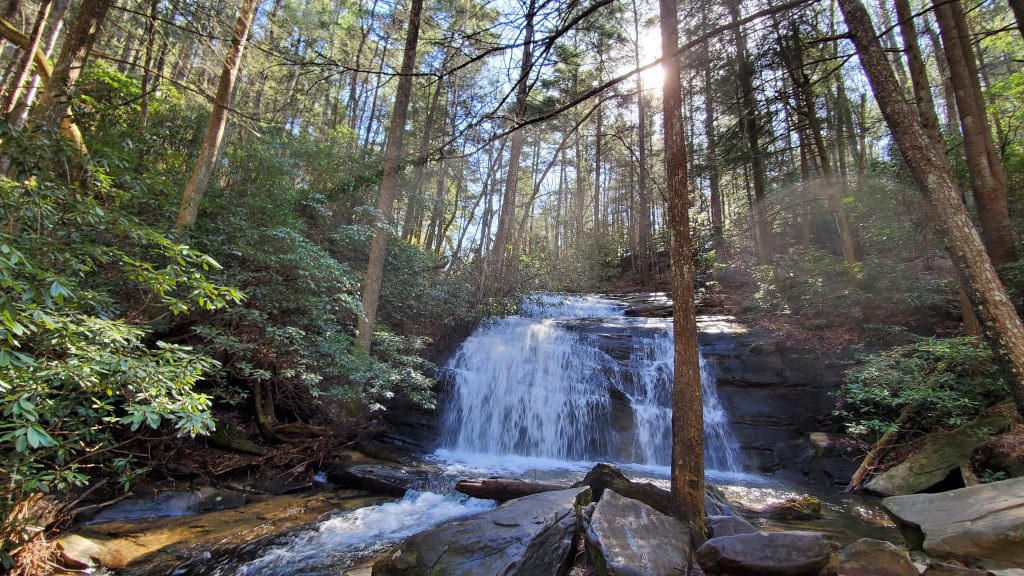
Long Creek Falls — Georgia
Approximately 2 miles round trip | Easy
One of the most accessible short hikes along the BMT, this route follows a beautiful mountain stream through shaded forest before reaching Long Creek Falls.
It’s an excellent introduction for dogs accustomed to shorter hikes.
Springer Mountain Loop — Georgia
Approximately 5–5.4 miles | Moderate
For hikers and dogs ready for something more substantial, this loop offers beautiful forest scenery and an opportunity to experience the southern end of the BMT.
Expect some climbing and uneven terrain.
Three Forks to the Toccoa River — Georgia
Approximately 8.8 miles one way | Moderate | Shuttle required
This longer adventure combines mountain forests, creek scenery, and the impressive Toccoa River suspension bridge.
The distance makes it better suited to experienced canine hikers. And remember that a suspension bridge that seems perfectly ordinary to a person may frighten a dog.
Never force a reluctant animal across a bridge or exposed section of trail.
For additional hiking ideas, visit the BMTA’s Weekend Hikes with the Family page.
Trail Etiquette: Good Dogs Make Good Trail Neighbors
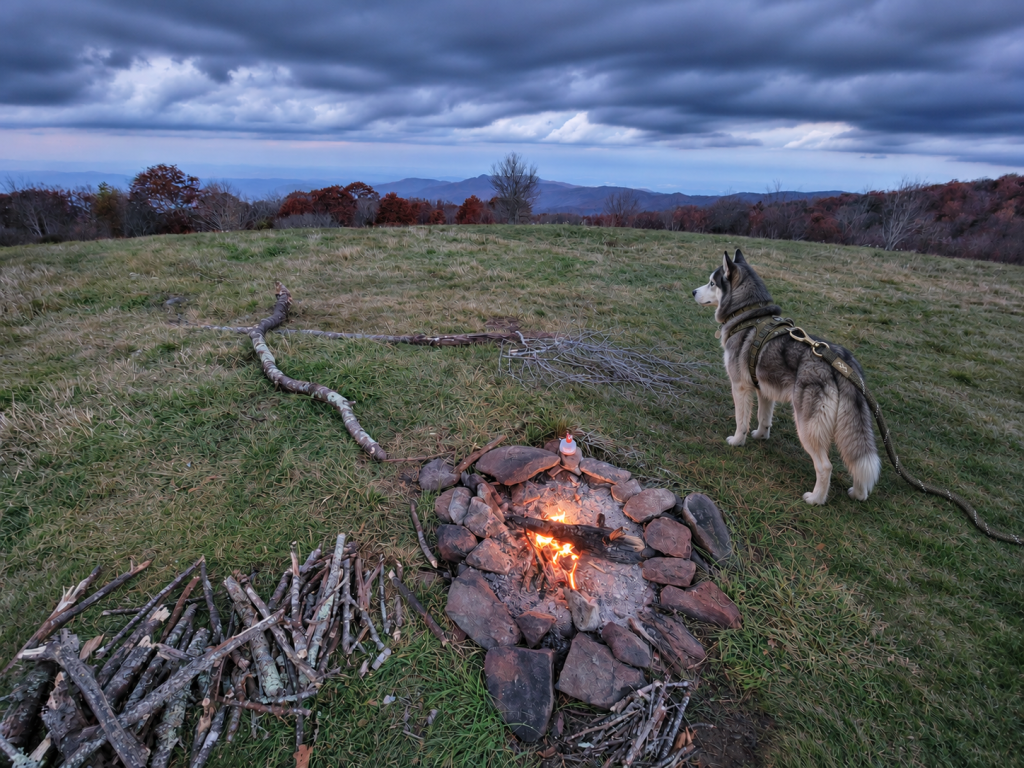
A dog may be the perfect hiking companion for its owner, but not everyone on the trail feels the same way.
Some hikers fear dogs. Others may have reactive animals of their own. Families with young children may be uncomfortable with unfamiliar dogs approaching them.
Good etiquette means recognizing that everyone deserves to enjoy the trail.
When approaching others, shorten your dog’s leash and keep it close. Step aside where practical and allow people to pass comfortably.
Don’t assume another person wants to meet your dog, even if your companion is exceptionally friendly.
Never allow your dog to jump on people, approach unfamiliar dogs without permission, or investigate another hiker’s belongings.
The best trail dog isn’t necessarily the friendliest. It’s the one whose owner keeps it under control.
Leave No Trace Applies to Dogs, Too
Dog waste can introduce pathogens and excess nutrients into natural environments, particularly near waterways.
Always carry waste bags, pick up after your dog, and pack waste out to an appropriate trash receptacle.
Never leave filled bags beside the trail, even if you intend to retrieve them later.
Keep dogs on established trails rather than allowing them to trample vegetation or explore sensitive streambanks.
The same Leave No Trace principles that protect the BMT from human impacts apply to our canine companions.
Seasonal Considerations: Every Season Has Its Challenges
The BMT offers year-round beauty, but each season introduces different considerations for dogs.
Spring: Mud, Ticks, and Wildlife
Moderate temperatures and flowing streams make spring appealing, but muddy trails and slippery crossings require caution.
Wildlife is also nesting and raising young. Keep dogs leashed, check regularly for ticks, and avoid disturbing animals.
Summer: Heat Can Be Dangerous
Southern Appalachian summers can be hot and humid, even beneath a shaded canopy.
Dogs are vulnerable to overheating during strenuous exercise.
Plan hikes for cooler morning hours, choose shaded routes, provide frequent breaks, and carry plenty of clean water.
Watch for excessive panting, weakness, stumbling, or unusual behavior. If heat illness is suspected, stop, begin cooling your dog with water, and seek urgent veterinary care.
Fall: Comfortable Weather, Changing Conditions
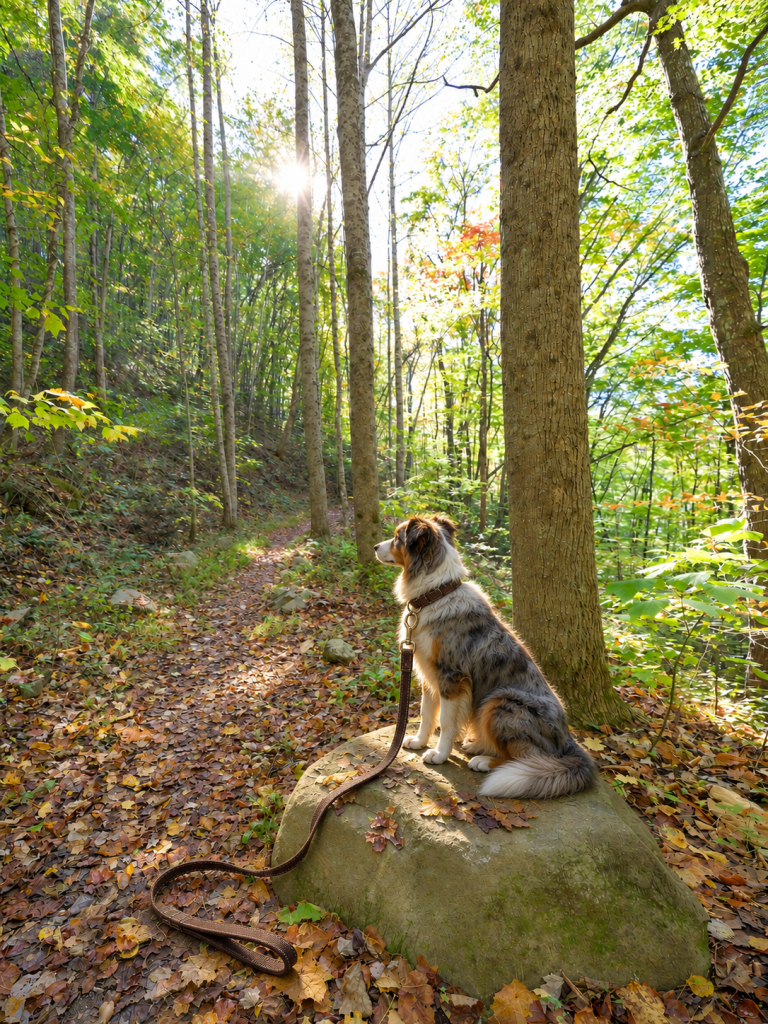
For many dogs, fall may be the most enjoyable hiking season.
Cooler temperatures make climbing more comfortable, while colorful forests create a spectacular backdrop.
But falling leaves can conceal rocks and roots, daylight becomes shorter, and wildlife remains active.
During hunting seasons, consider a blaze-orange vest for your dog in areas where hunting is permitted.
Winter: Cold, Ice, and Paw Protection
Winter hiking can be enjoyable for dogs accustomed to cold weather, but icy rocks, freezing streams, and exposed ridgelines demand caution.
Older dogs, smaller breeds, and short-haired animals may need additional protection.
Check paws for cuts and ice buildup, and consider protective booties when conditions warrant.
Regardless of season, your dog’s comfort and safety should determine the pace and distance—not your hiking ambitions.
Wildlife Encounters: Keep Your Dog Close
The BMT passes through some of the most biologically diverse forests in the eastern United States.
Black bears inhabit much of the trail corridor. A dog that surprises or chases a bear can turn an otherwise peaceful encounter into a dangerous situation.
Keep your dog close, stay alert, and never allow it to pursue wildlife.
Venomous snakes, including copperheads and timber rattlesnakes, are another consideration during warmer months.
Avoid allowing dogs to investigate rock crevices, thick brush, or areas where visibility is limited.
If a snakebite occurs, seek veterinary care immediately.
Remember that even small animals deserve protection. Ground-nesting birds, salamanders, and countless other species depend on the habitats surrounding the trail.
A dog doesn’t need to catch an animal to disturb it.

What to Pack for Your Canine Companion
A little preparation makes a tremendous difference. Before heading out, pack:
Six-foot leash and secure harness or collar
Clean drinking water and collapsible bowl
Food or high-energy treats
Waste bags and a way to carry them out
Identification tags with current contact information
Basic dog first-aid supplies
Tick remover and appropriate parasite prevention
Paw protection or extra warmth when needed
- For longer hikes, consider how you would evacuate your dog if it became injured or unable to walk.
- Cell service can be unreliable along the BMT, and carrying an injured dog out of the backcountry may be difficult.
Hiking Together Is About More Than Miles
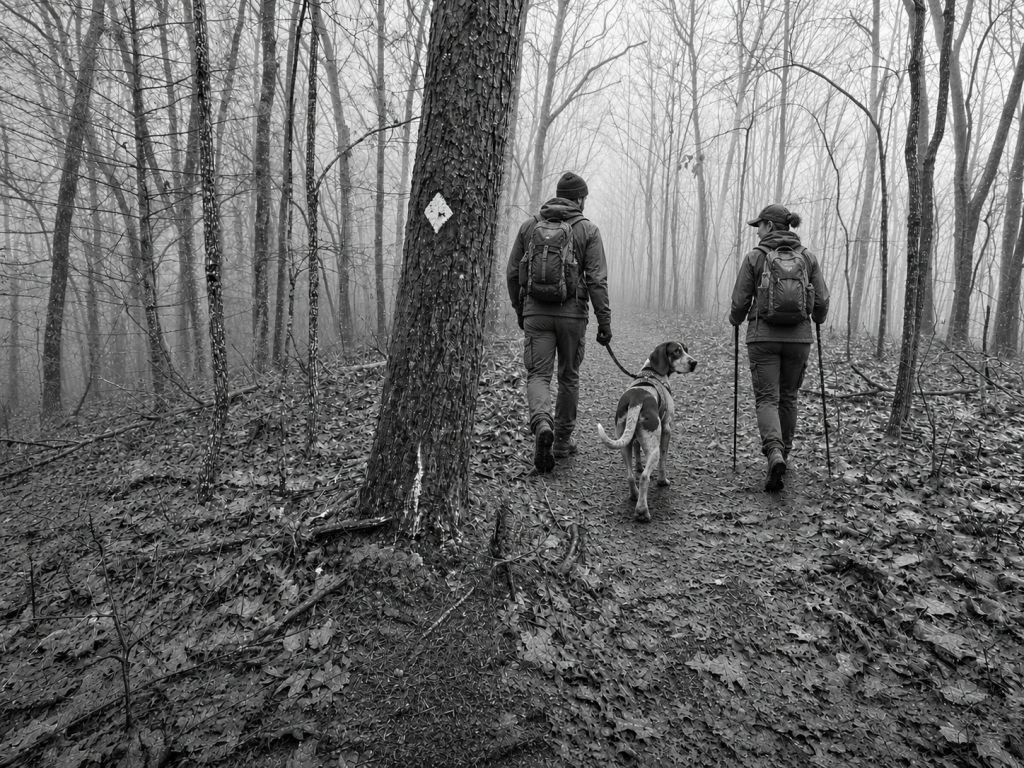
One of the things dogs do especially well is remind us that a hike doesn’t have to be a race.
They notice things we walk past.
An unfamiliar scent.
A breeze carrying the smell of a nearby creek.
A patch of sunlight warming the forest floor.
For a dog, the journey may be every bit as interesting as the destination.
Perhaps there’s a lesson in that for the rest of us.
The Benton MacKaye Trail offers something increasingly precious: an opportunity to experience the natural beauty, solitude, and wild landscapes of the Southern Appalachians.
Those qualities are worth protecting.
When we hike responsibly with our dogs, we help ensure the trail remains welcoming to others while preserving the forests and wildlife that make it special.
So choose a trail that suits your companion.
Bring the leash.
Carry plenty of water.
Respect wildlife and other hikers.
And don’t worry if you stop a little more often than planned.
Sometimes the best hiking partner is the one who reminds you to slow down and enjoy the journey.

Help Leave a Footpath for Generations to Follow
Every mile of the Benton MacKaye Trail reflects the dedication of volunteers and supporters who work to protect, preserve, and maintain this remarkable footpath.
Whether you hike on two legs or four, you can help ensure future generations enjoy the same wild landscapes.
Join the BMTA — Support the organization dedicated to protecting and preserving the trail.
Maintain the Trail — Volunteer on a trail-maintenance outing and help keep the BMT safe and accessible.
Donate to the BMTA — Help fund the tools, materials, training, and conservation projects that make this work possible.
Every membership, volunteer hour, and donation helps leave a footpath for generations to follow.